Blog

What Chiropractors and Integrative Practices Should Look for in a Regenerative Biologic Product
The regenerative biologic category has grown quickly, and with that growth has come a wide range of products making similarly broad claims. For chiropractors and integrative providers looking to implement regenerative medicine in their practice, knowing what to look for is more useful than any marketing claim. This guide walks through what to evaluate before you add any regenerative product for chiropractors or integrative practices to your offerings.

Osteoarthritis and Regenerative Medicine: What Chiropractors and Integrative Practices Need to Know
Osteoarthritis is one of the most common conditions chiropractors and integrative providers see in practice. Patients are living longer, staying more active, and increasingly looking for options that do not involve surgery or long-term pharmaceutical use. Regenerative medicine is an active area of osteoarthritis research. Separately, provider-dispensed topical wellness products are attracting interest as non-invasive options that support the body’s natural recovery process. This article reviews osteoarthritis, emerging regenerative medicine research, and how provider-dispensed topical wellness products can be discussed responsibly within chiropractic and integrative practices.

The Between-Visit Gap: Why Regenerative Practices Need a Take-Home Continuation Protocol
The biggest gap in regenerative medicine is not the treatment. It is what happens after. Patients leave the clinic following a PRP or stem cell injection, go home, and have nothing structured to support them until the next visit. No continuation protocol. No biologic support. Just time. That gap is costing practices outcomes, retention, and recurring revenue. It is entirely closable without adding a single appointment to your schedule. And when the gap closes, providers consistently report patients feeling more supported throughout their care journey and more engaged in following their provider-directed protocol.
What Are Wharton’s Jelly Mesenchymal Stem Cells? Understanding WJ-MSCs, Secretomes, and Cell-Free Research
Wharton’s Jelly is a soft, gelatinous tissue found inside the human umbilical cord. It contains a highly concentrated population of cells called mesenchymal stem cells (MSCs) that have been the subject of growing scientific interest over the past two decades. What makes them particularly relevant to cell-free research is not only the cells themselves, but also what they secrete: a complex mixture of proteins, growth factors, and extracellular vesicles that researchers study for their role in biological signaling. Cell-free approaches that work with this secreted material, rather than with live cells directly, represent one of the more active areas of current investigation in this field.
Extracellular Vesicles vs. Exosomes: What They Are and Why They Matter in Regenerative Medicine Research
If you have been hearing a lot about exosomes and extracellular vesicles lately, you are not alone. These two terms are often used interchangeably, even though they are not quite the same thing. Extracellular vesicles (EVs) are tiny particles that cells release as part of normal biological communication. Exosomes are one specific type of EV, generally considered the smallest and most studied subtype. Understanding the difference between them is a useful starting point for anyone following the science of cell biology and regenerative medicine research.
Beyond the Cell: How Mesenchymal Stem Cell Secretome Is Reshaping Regenerative Medicine
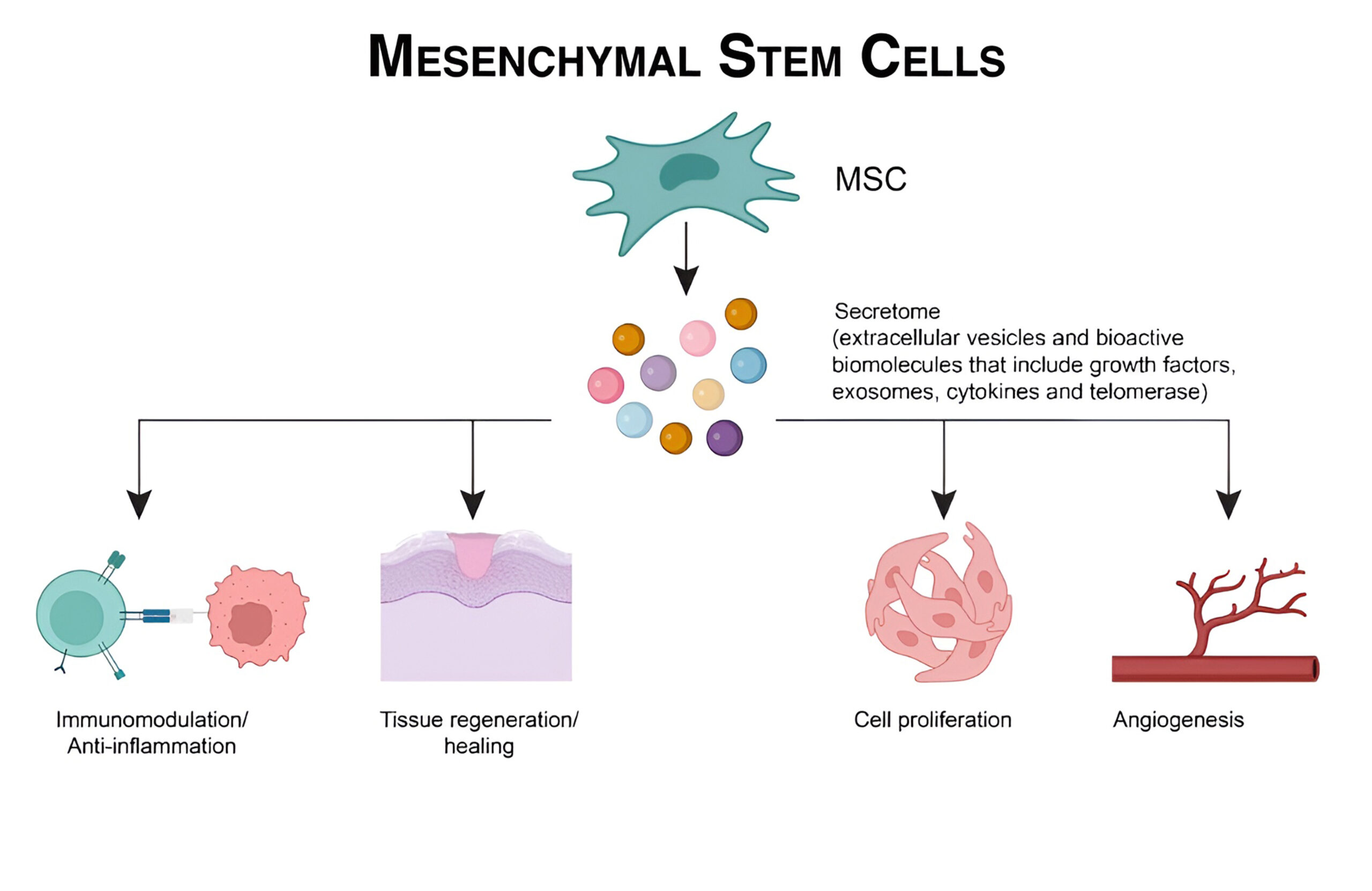
Understanding the Body’s Natural Signaling Process The way we think about regenerative medicine is shifting. It’s not just about the cells anymore—it’s about their secret language of signaling. What the MSC Secretome Includes At NuvoCell Biologics, we’re closely following—and contributing to—a new wave of regenerative science that focuses not on the cells themselves, but on … Read more